There was a time when the most basic thing we expected from bread was to fill us up and give us energy. Today we talk not only about its taste but also about its protein value, its amino acid profile and what it can add to our daily nutrition. The question is no longer "How filling is bread?" The question has become "What does bread add to nutrition?"
Expectations changed, bread stayed
Bread is one of the most familiar products on any table. People are not giving it up; they are changing what they expect from it. For a baker, that is a new customer request. For a food producer, it is a new product development brief. For a consumer, it is a new yardstick next to the sentence "it is no different from the bread I am used to."
Throughout our journey we worked with this thought in mind. Our goal was to keep the taste and texture of traditional bread while looking for ways to develop high-protein bakery products that are nutritionally more capable. We did not want to turn bread into something else. We wanted to turn the same bread into a product that says more.
It started with bread and became a platform
BÄKKER today is more than bread. The use areas listed in our catalog run from bread and bread varieties to pogaca, buns and pastries, from bazlama to pide and lavash, and from pizza dough to yeast-free cookies. Because the same approach can be applied to different bakery products, we think of BÄKKER not as a single product but as a platform for functional foods.
That wording needs care. A platform does not mean the same result is guaranteed in every product. The nutritional values in the catalog can vary with production and baking conditions, and the protein value given for the mix is separate from the value given for the baked product. Saying this up front is the first step in building trust in the product.
How to read a protein value
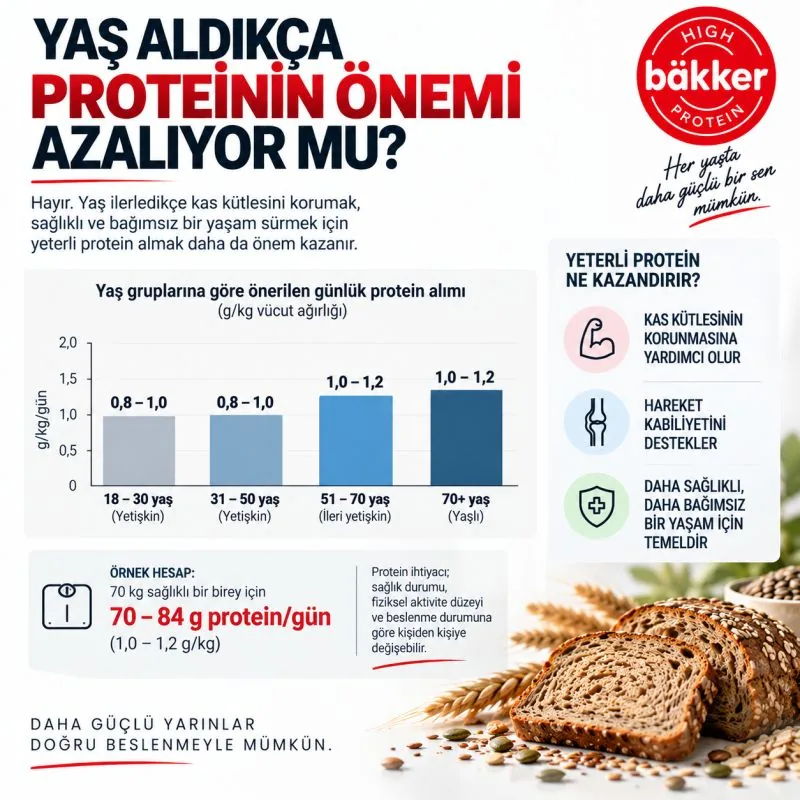
"High-protein" does not give a number by itself; you need to know what each number describes. One example from the catalog: for Plain Mix No.20, the mix gives 32.12 g of protein per 100 g, while the baked product gives 20.54 g of protein per 100 g (catalog, pages 3–7). The two values cannot replace each other: one describes the dry mix, the other the bread that came out of the oven. The difference comes from factors such as water, yeast and baking.
So when reading a product's protein value, check whether it is given for the mix or the baked product, under which conditions it was measured and what the source is. The product is a food; it is not used for treatment, and nutritional values can vary with production and baking conditions.
A moment beyond the lab reports
Behind this work are laboratory analyses, trials and an R&D process that has lasted years. But beyond all of that there is something else, and I want to describe it.
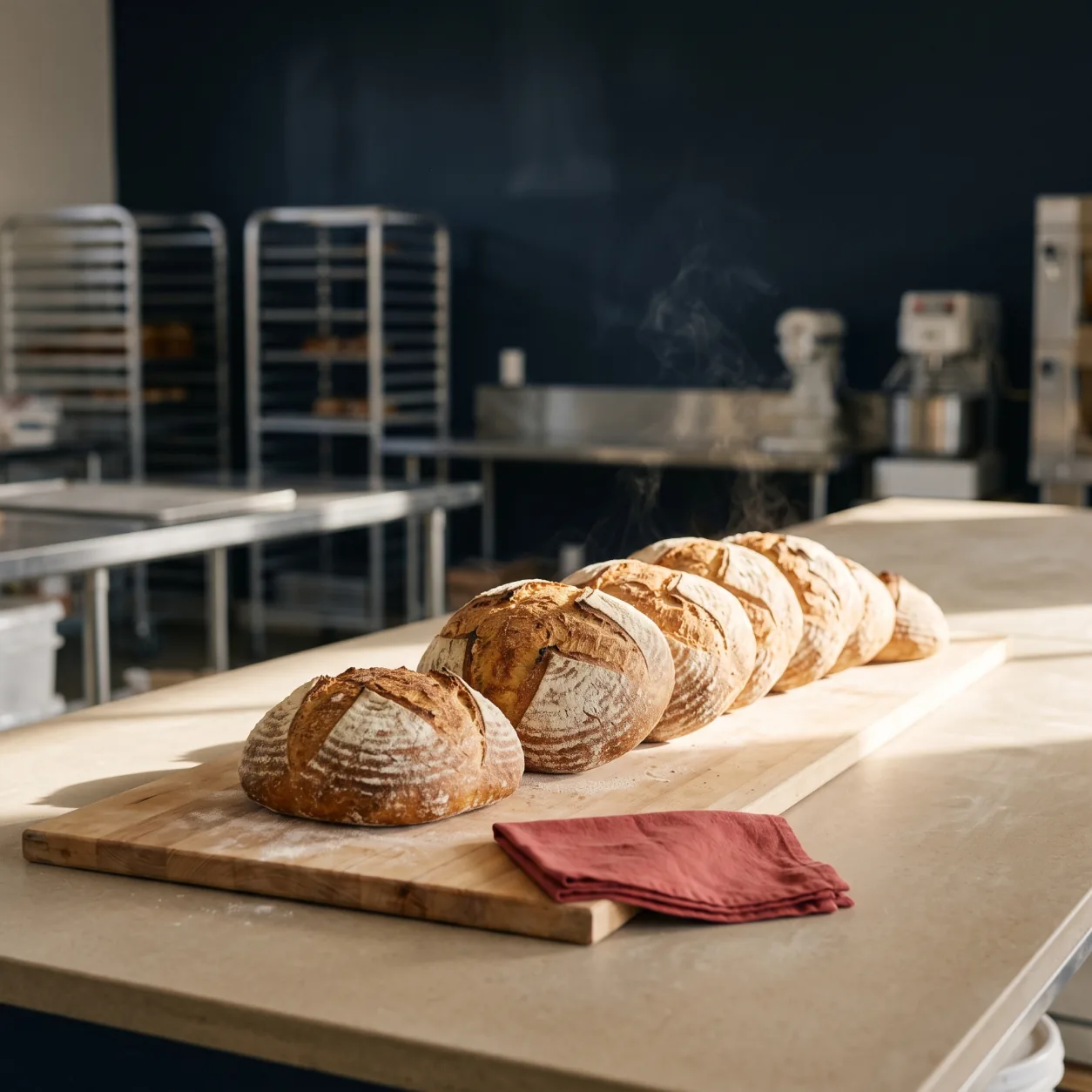
This morning, the first moment the bread came out of the oven was wonderful. When I opened the oven door there was the rising warmth, the smell of freshly baked bread and the steam lifting off it. I will admit it: being the person who takes the bread out of the oven and enjoys that moment first is a great pleasure.
Sometimes you feel the reward for your effort not in long reports, lab results or meeting rooms, but in front of a loaf that has just come out of the oven with steam still rising from it. I thought again in that moment. What makes me happiest on this journey, besides the chance to touch many people's lives, is that after all these years I still carry the excitement of the first day.
Why share this?
Food technology is often told in numbers: protein ratio, amino acid profile, analysis results. These matter; you need them to stand behind a product. But we should also remember that at the end of the line a product leaves the oven and goes to someone's table or a bakery's display.
A good high-protein bakery product should answer two questions together:
- What does it offer nutritionally? Topics such as protein value and amino acid profile should be explained with data whose source is clear.
- How does it behave in the oven and at the table? Crust, texture, aroma and chewing experience play at least as big a part in acceptance as the nutrition table.
When these two questions are not separated, the future of bread really can go beyond flour. My friends and I first shaped our dreams in the laboratory, and then they came to life in the oven.
Related pages: all articles, our protein page, Yüksek Proteinli Sade Unlu Mamuller Miksi No.20, From traditional to functional in baked goods with BÄKKER.